ON Y VA – Cooperative Housing Development – 1st Place Littau, Luzern / 2025
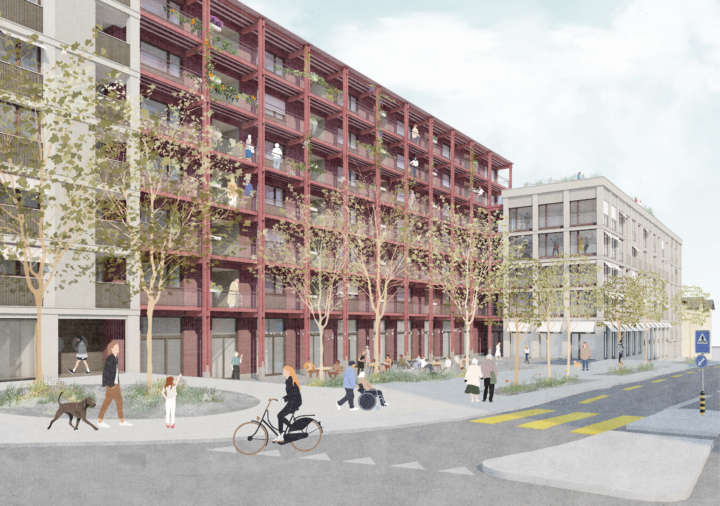
“On y va” – 1st Place / Invited competition
Cooperative Housing Development on Luzernerstrasse / Littau, Luzern
In collaboration with EDER Landschaftsarchitektur
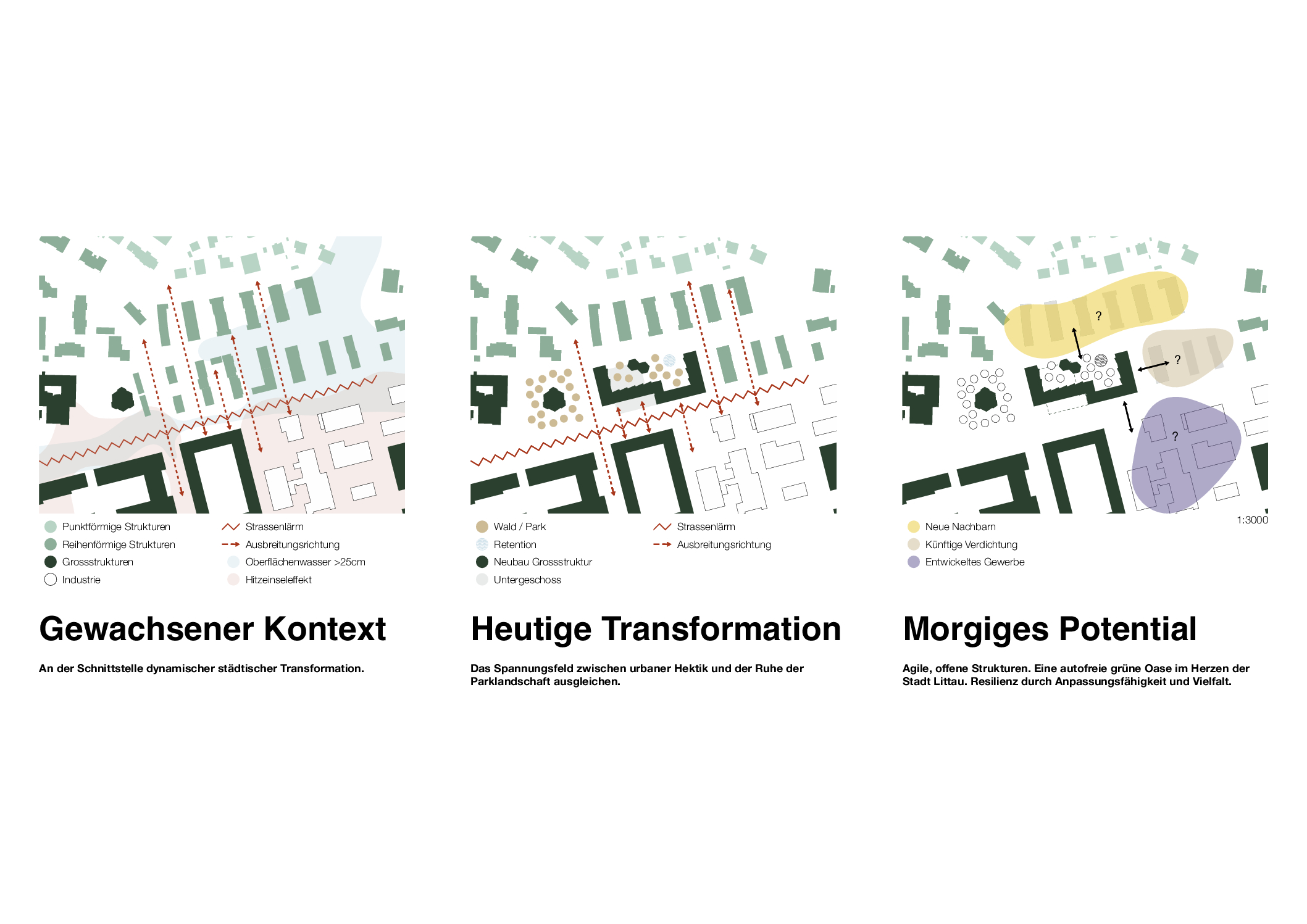
The project responds to the city of Lucerne’s strategic focus on urban densification – to build more housing within existing urban areas to accommodate population growth and combat housing shortages. The city explicitly aims to increase the share of “Gemeinnützige” (non-profit) and affordable housing in communes such as Littau that contain some of the city’s largest unbuilt or under-utilised sites, which present an ideal opportunity to build at scale.
The client, Building Cooperative Matt — which operates numerous cooperative housing projects in the region — requested a mix of apartment sizes, with at least one quarter designed as compact, elderly-friendly units complemented by attractive shared facilities. The objective is to encourage older residents currently occupying affordable yet underused family-sized apartments to downsize, thereby freeing up larger units for families — a group facing sustained housing demand in the Canton of Lucerne.
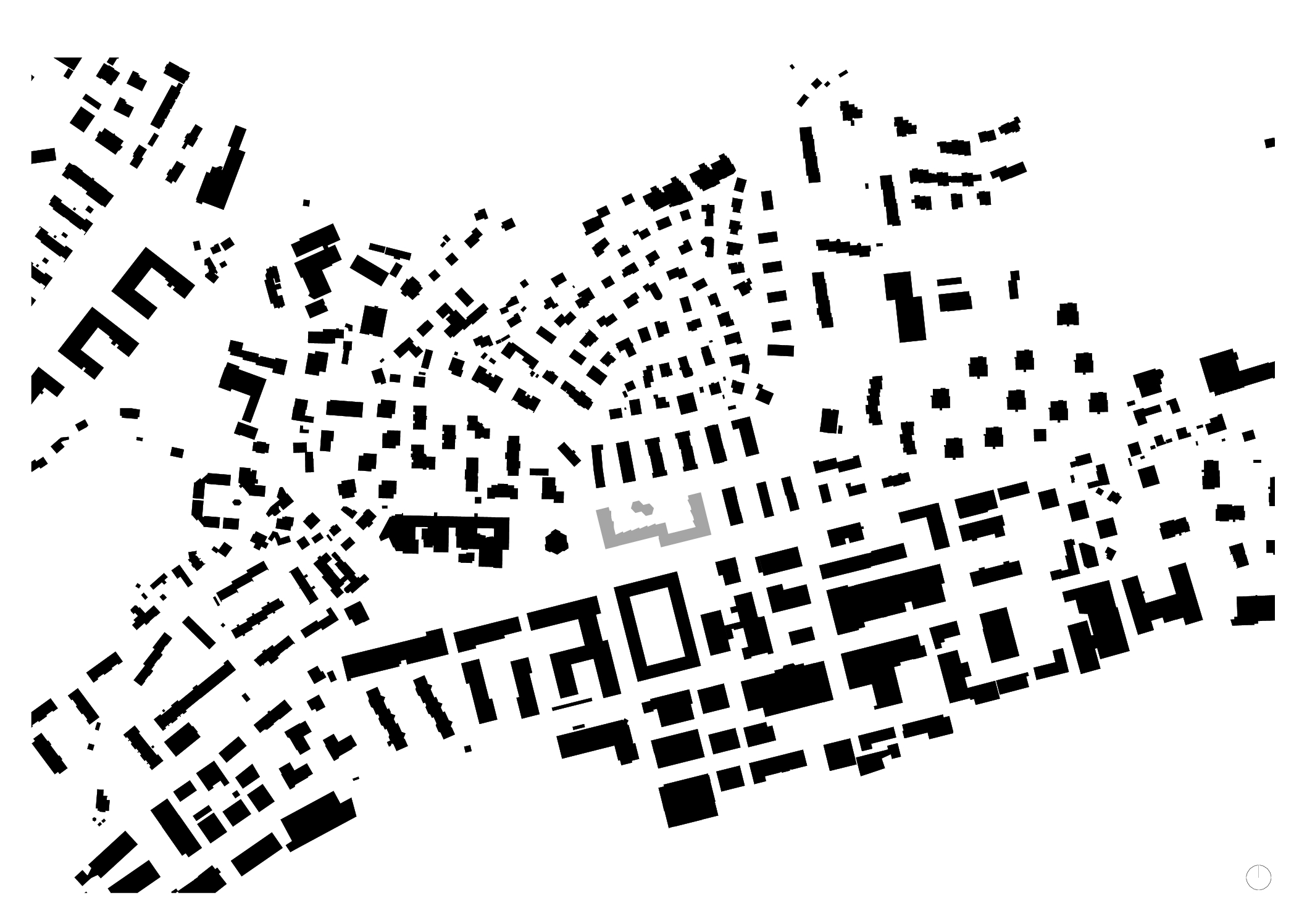
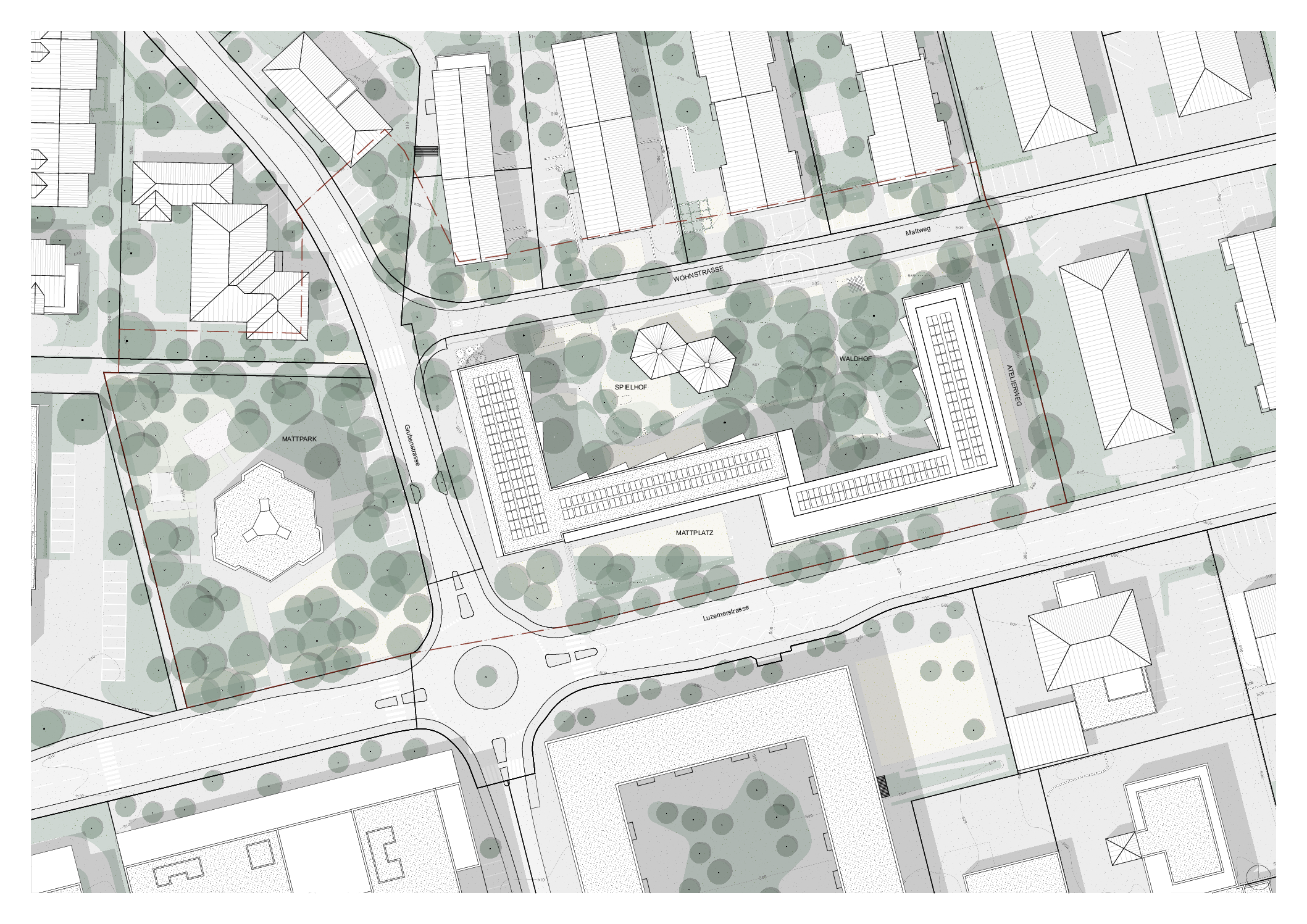
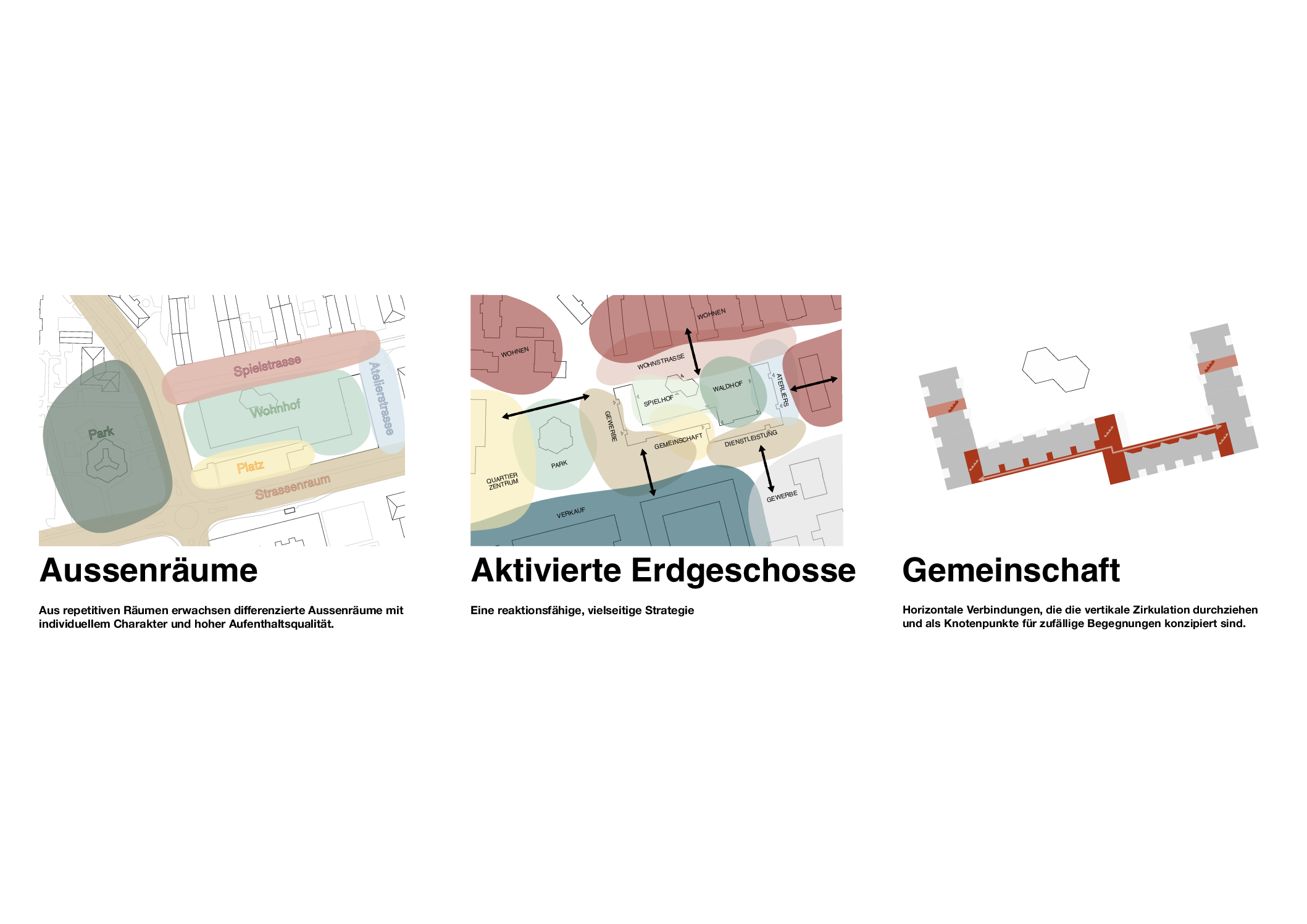
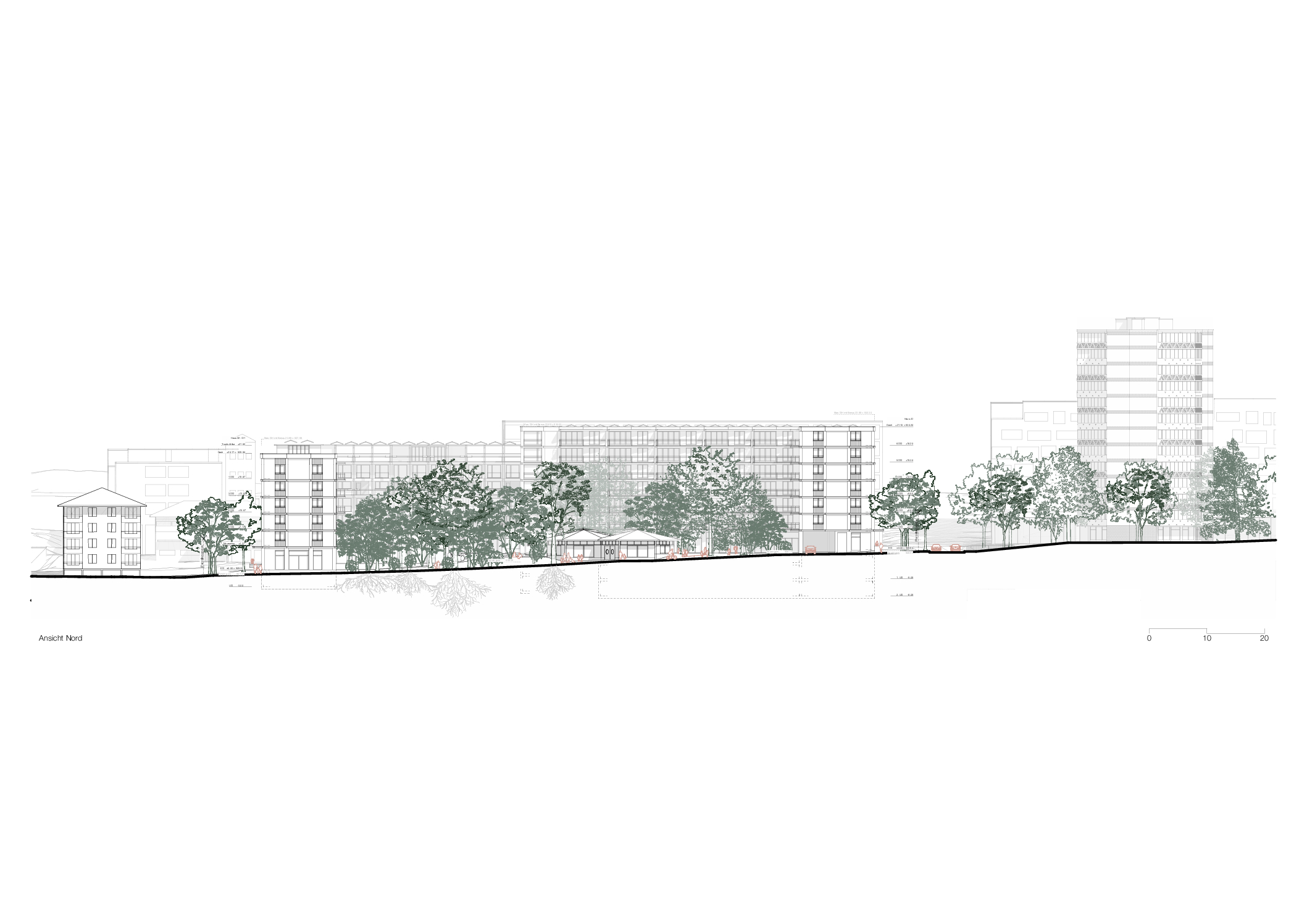
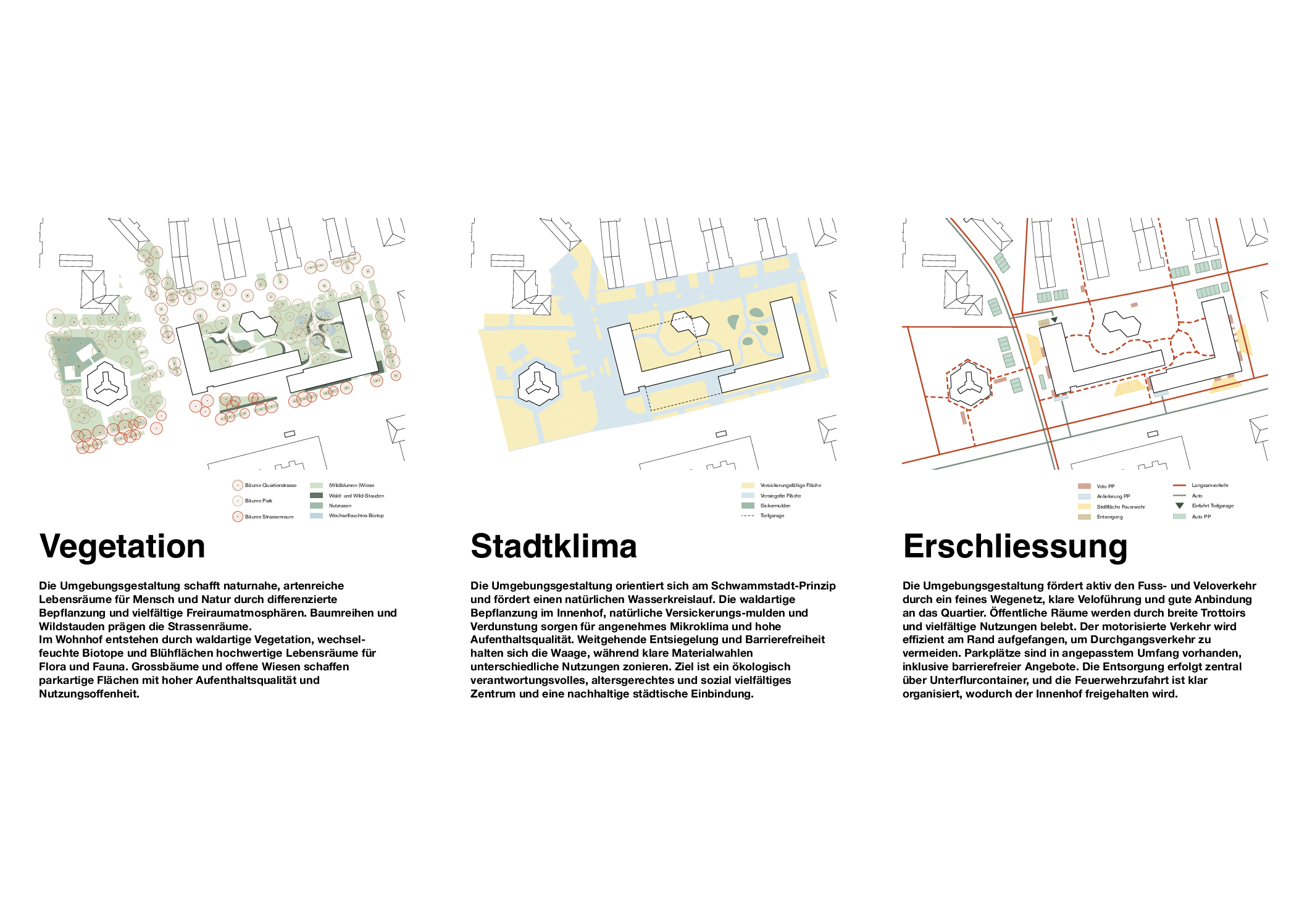
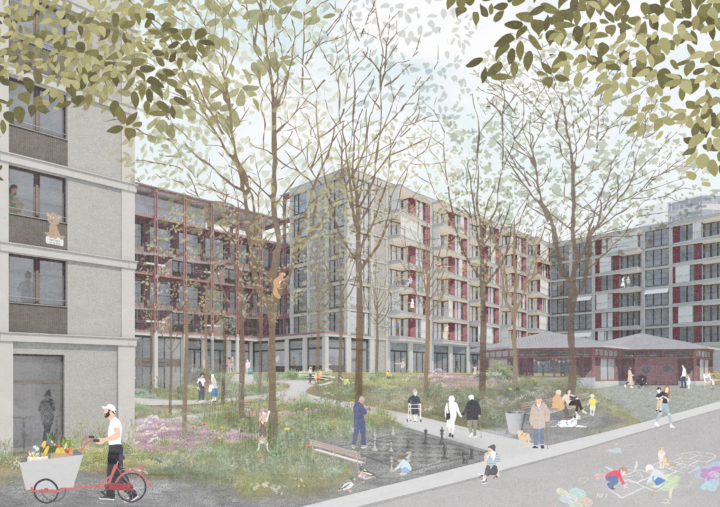
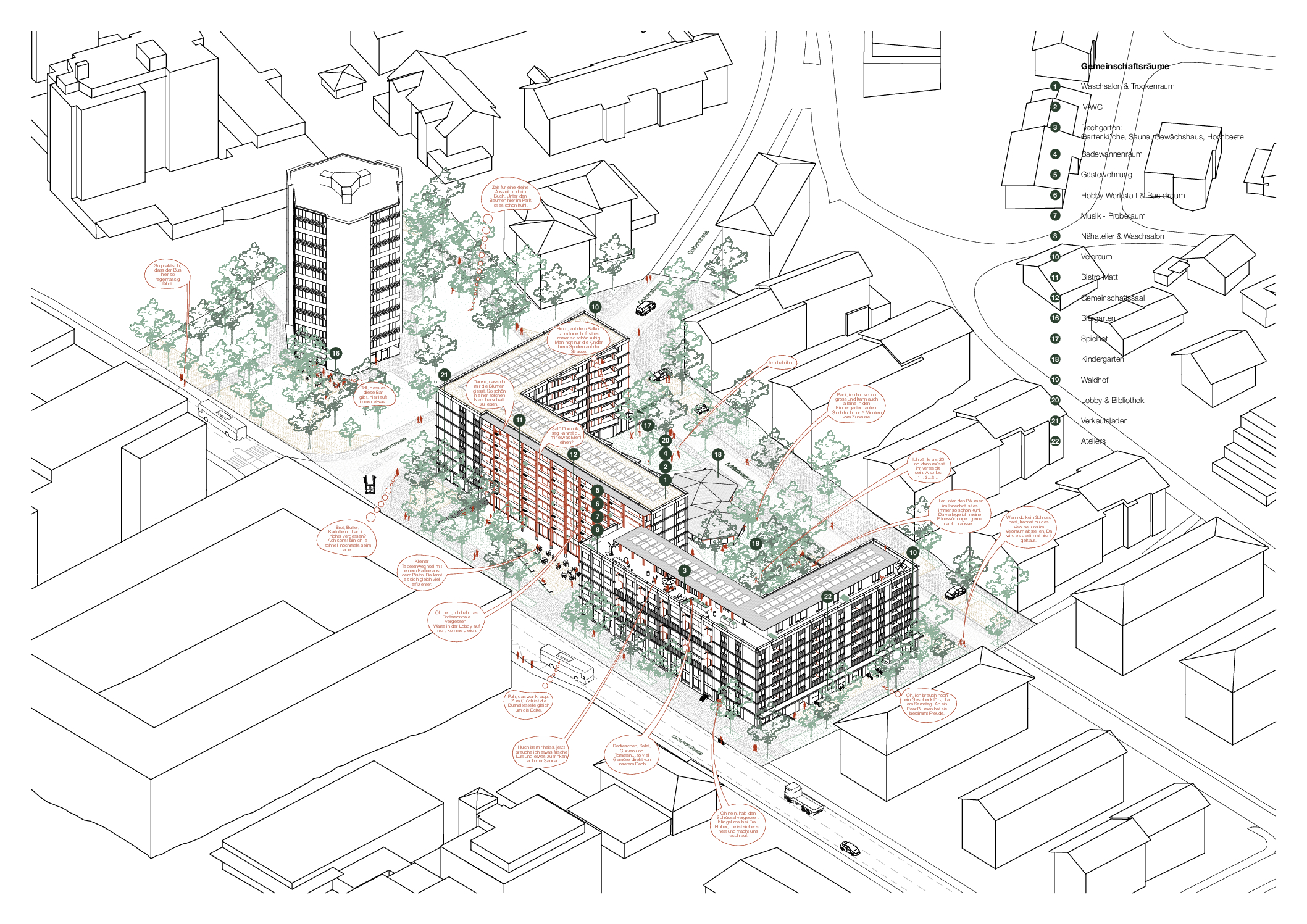
Mirrored and staggered L-shaped volumes relate to the large-scale developments to the South, while generous open spaces and a single-story kindergarten pavilion create a gentle transition to the lower-density residential fabric to the north. The configuration forms a generously proportioned, quiet courtyard shielded from the heavy traffic and establishes a densely landscaped communal garden that serves both residents and the wider neighbourhood.
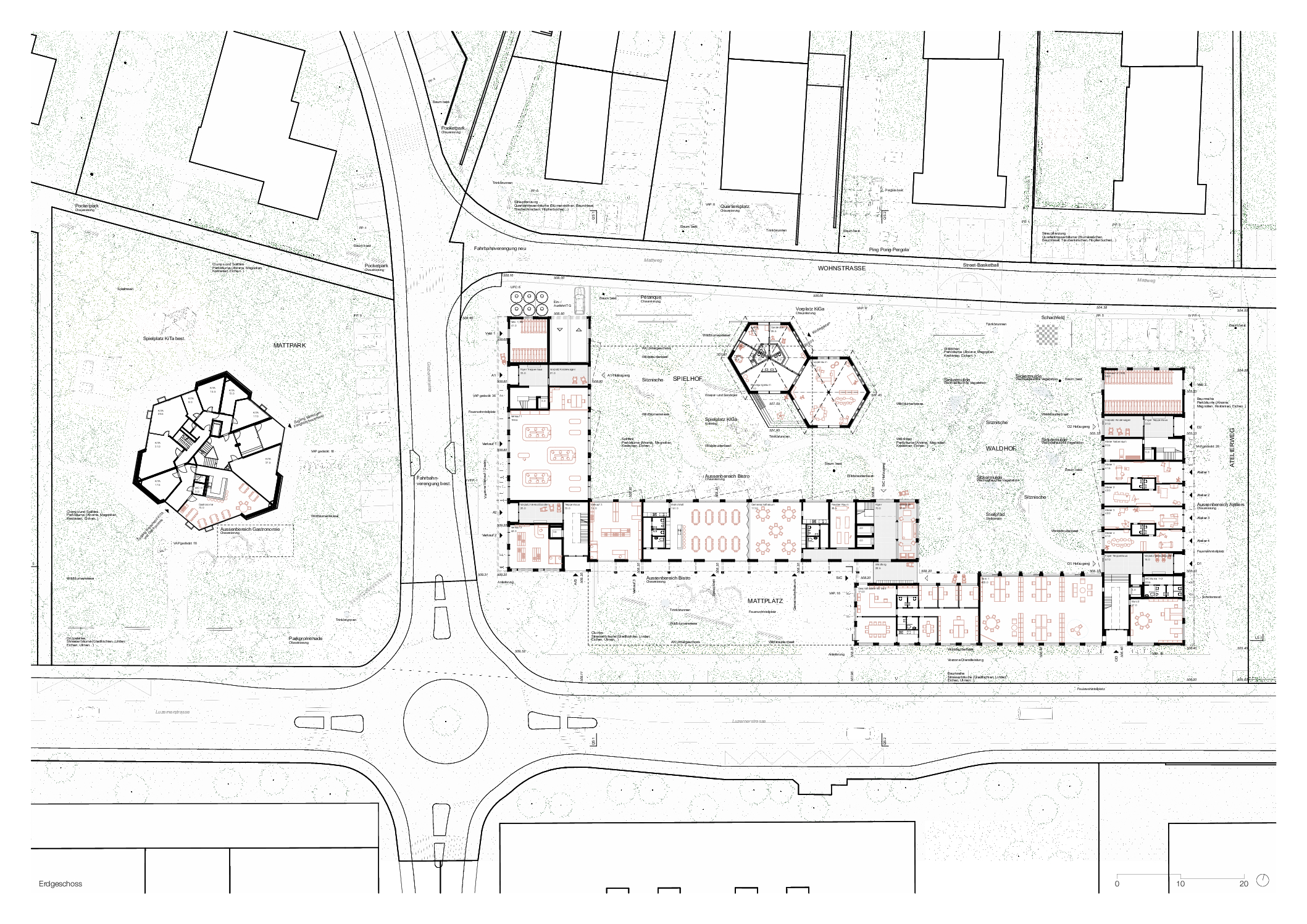
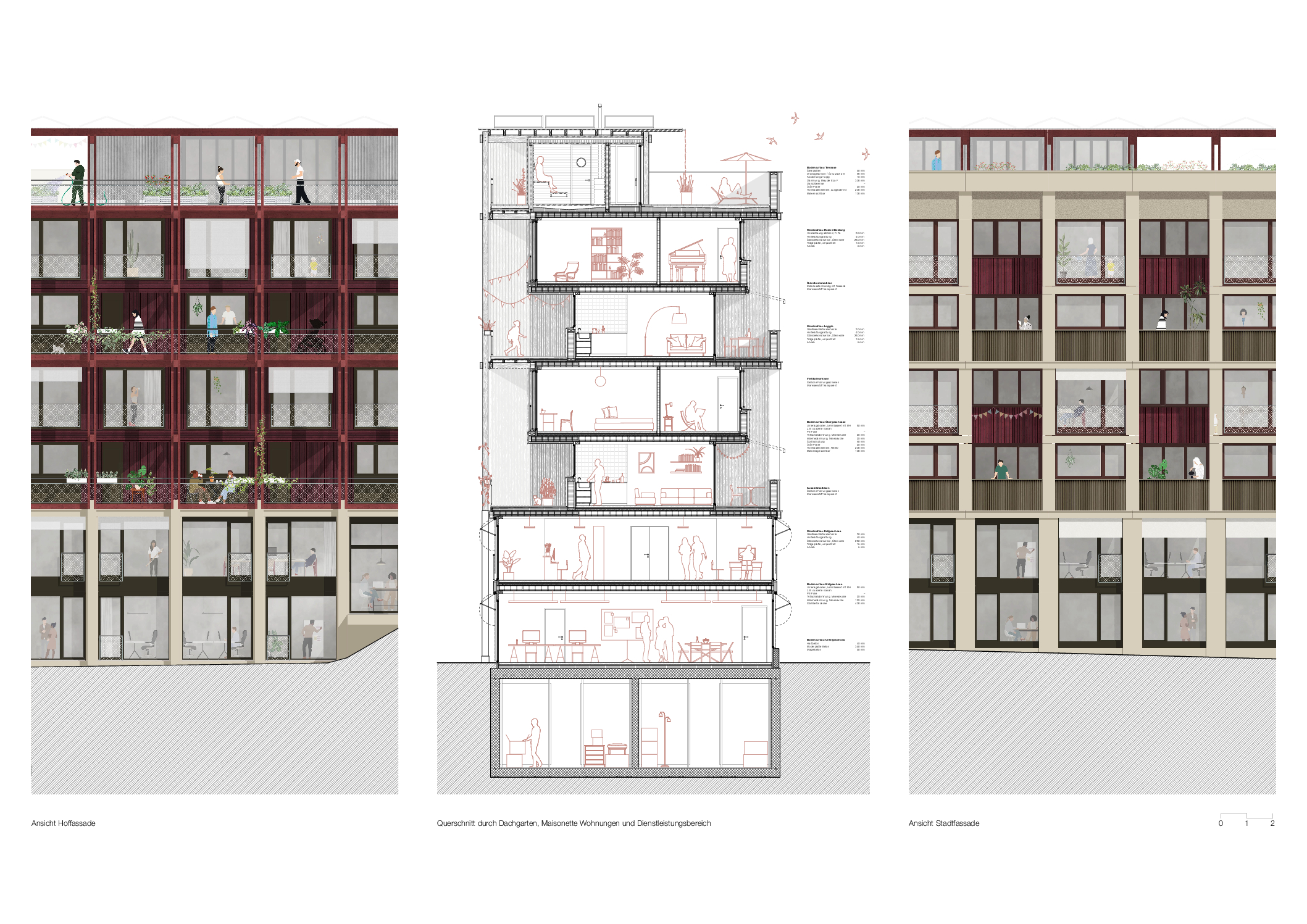
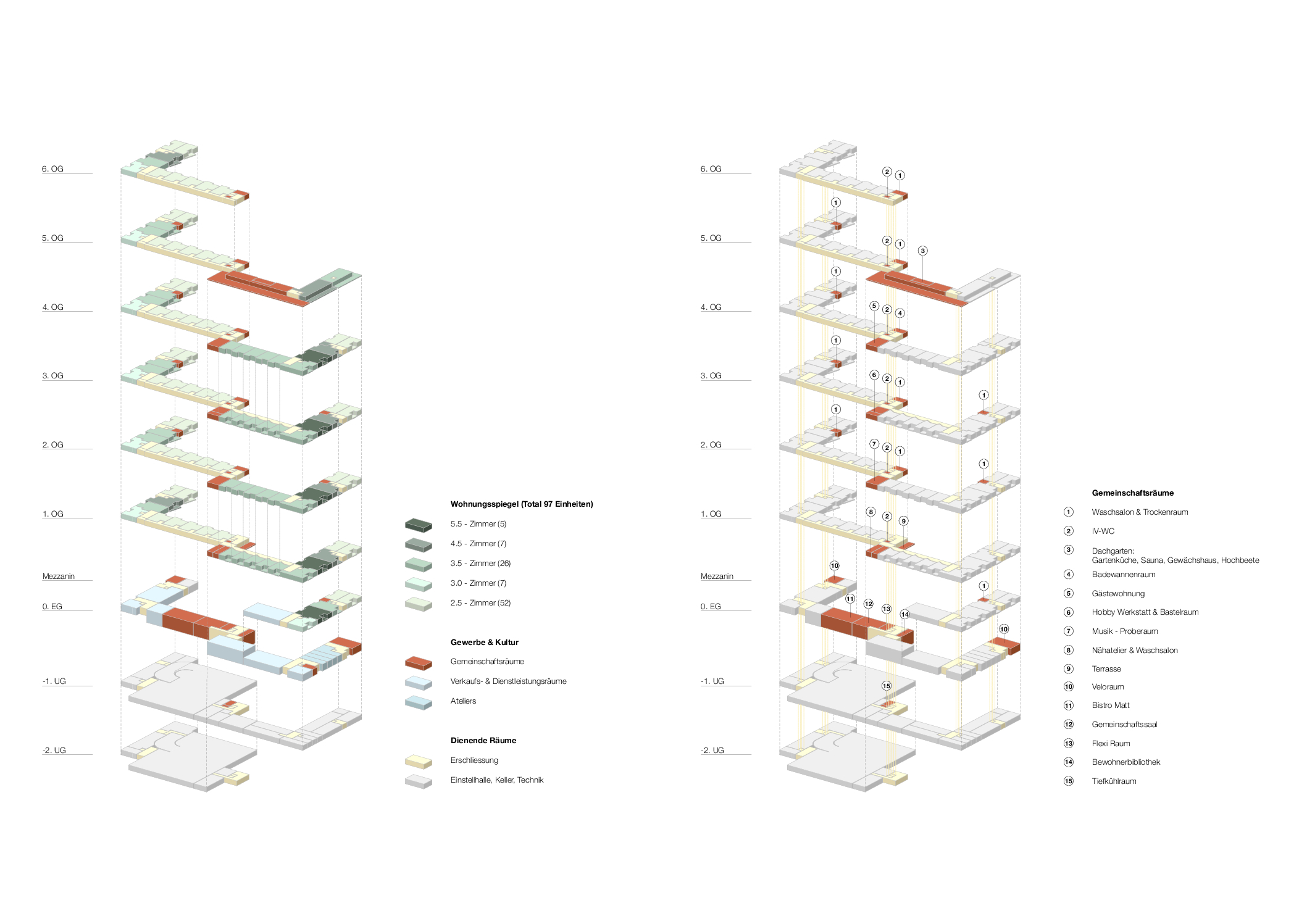
The ground floor is activated with shared residential amenities, ateliers, and flexible gastronomic and commercial spaces, creating a broad gradient of atmospheres, ranging from lively public plazas, semi public resident-focused zones to quieter office fronts.
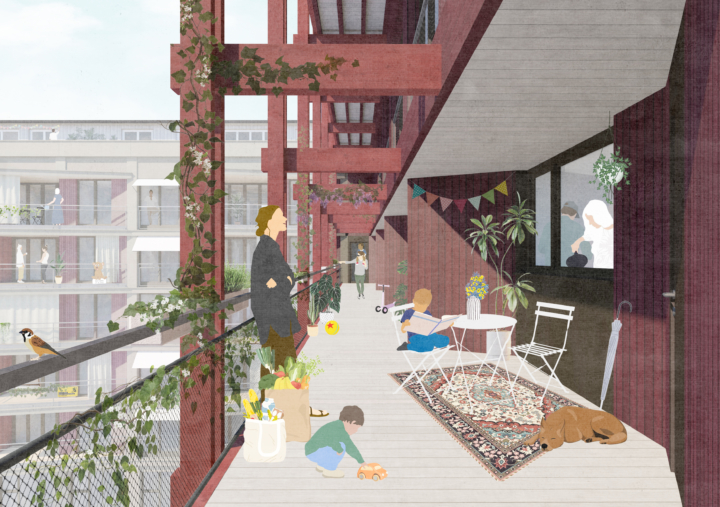
The development comprises 97 dwellings, offering a diverse range of apartment sizes and typologies that respond to the socio-spatial needs of a broad tenant base. Shared facilities — including laundry, music room, sauna, and workshop — are strategically positioned at key circulation nodes along the shared gallery corridor to enhance accessibility and encourage informal social interaction. A simple, precise geometry of the plan allows for planning flexibility and easier adaptation to future conversions. The complex is conceived as four interconnected building volumes. Subtle variations in form and material articulation break down the overall scale while strengthening residents’ identification with their respective building sections.